
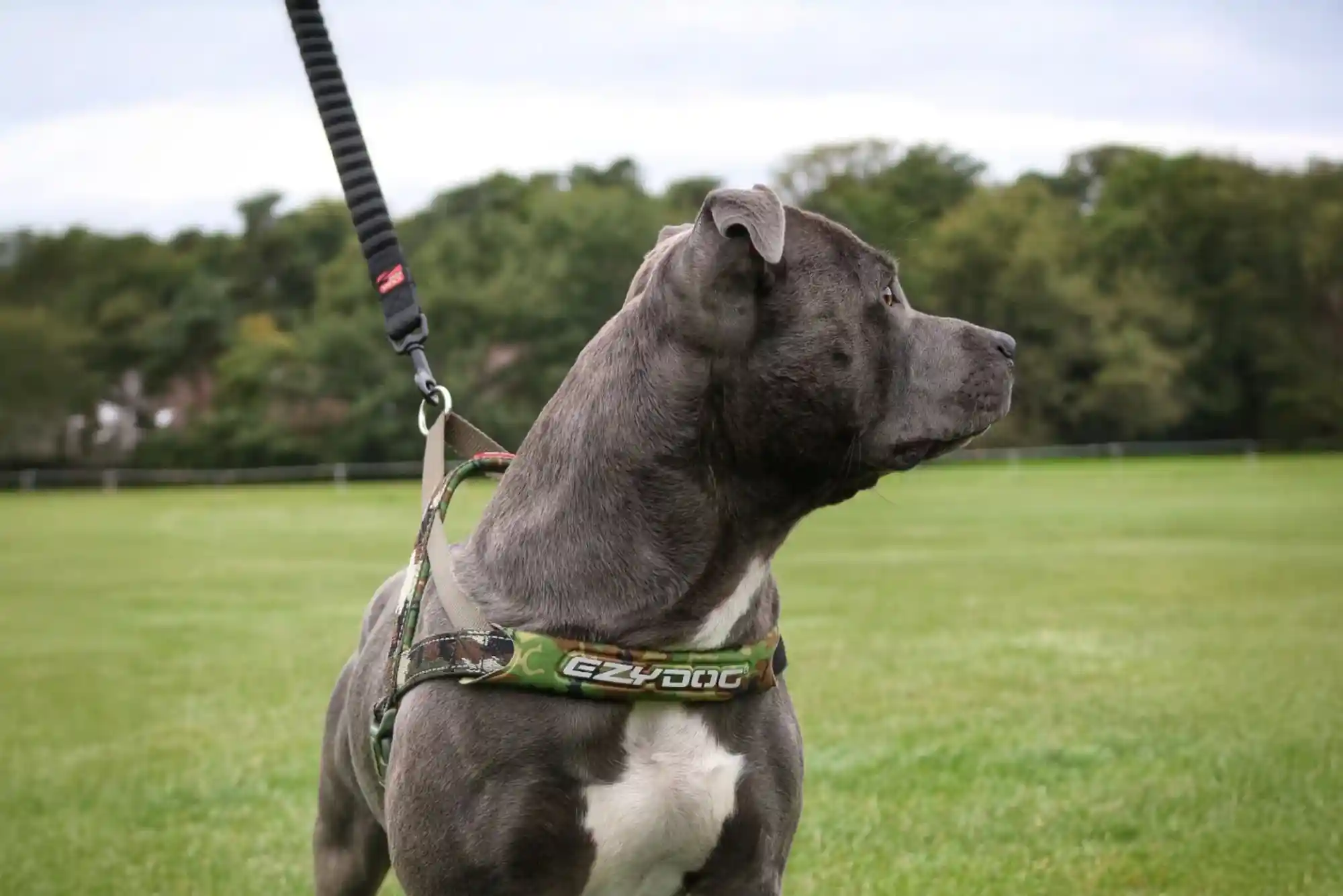
Introduction
Walking a powerful dog should feel controlled and enjoyable, not like a constant battle of strength. Pitbulls, Boxers, and other muscular breeds can generate surprising pulling power, particularly when they see another dog, a squirrel, a cyclist, or something else they want to investigate. A properly designed heavy duty no-pull harness can make a significant difference by giving you better control while distributing pressure more comfortably than relying on a collar alone.
The important point is that a no-pull harness is not a magic solution. The best results come from combining a durable, correctly fitted harness with consistent loose-leash training. Choosing the right design also matters because a harness that looks strong but shifts, rubs, or restricts natural movement can create new problems.
Whether you own a strong adult Pitbull, energetic Boxer, or another powerful puller, understanding what makes a harness genuinely heavy duty will help you choose equipment that is safer, more comfortable, and more practical for everyday walks.
What Makes a Heavy Duty No-Pull Harness Different?
A heavy duty no-pull harness is designed for dogs that can put substantial force through their leash. Standard lightweight harnesses may work perfectly for calm small or medium-sized dogs, but powerful breeds need equipment that can withstand repeated tension without stretching, breaking, or losing its shape.
Durability starts with the materials. Strong webbing, reinforced stitching, robust buckles, and secure attachment points are particularly important. The harness should also distribute pressure across the dog’s chest and body rather than concentrating force around the neck.
However, stronger does not automatically mean better. A harness can be extremely tough and still be uncomfortable if it is poorly shaped or incorrectly adjusted.

For strong dogs, look for a balance between strength, fit, freedom of movement, and control.
Why Pitbulls and Boxers Need Careful Harness Selection
Pitbulls and Boxers are athletic, muscular dogs with considerable physical strength. Their body structure means they can make a sudden burst of force when something catches their attention.
A Pitbull may lean heavily into a leash when excited, while a Boxer can combine strength with energetic, bouncy movement. In both cases, poorly designed equipment can shift around the body during a walk.
A good harness should remain stable when the dog changes direction, accelerates, or suddenly stops. It should not dig into the armpits, slide toward the throat, or rotate sideways.
Understanding breed characteristics can also help owners make better equipment choices. If you want to learn more about different canine breeds and their characteristics, the Heritage Dog Breed Encyclopedia can provide useful background.
The goal isn’t simply to restrain a strong dog. It is to create a reliable connection between dog and handler while allowing comfortable, natural movement.
How to Choose the Best Heavy Duty No-Pull Harness
Prioritize a Secure Fit
Fit is arguably more important than brand name. Even a premium harness can fail to provide good control if it is too loose or too tight.
A properly fitted harness should sit securely against the dog’s body without restricting breathing or movement. You should generally be able to place a couple of fingers beneath the straps, but there should not be enough room for the dog to back out of the harness.
Check the fit around the chest, neck area, and behind the front legs. The straps should not cut into the armpits when the dog walks.
It’s also worth checking the fit regularly. Dogs can gain or lose weight, and harness materials can stretch slightly over time.
Look for Reinforced Construction
Strong pullers can put considerable stress on stitching and attachment points. Examine the harness carefully before buying.
Reinforced stitching around leash attachment points is especially important. Buckles should close securely and resist accidental opening. The webbing should feel substantial without being excessively stiff.
For a powerful dog, these details are not cosmetic. They are part of the equipment’s safety margin.
Consider Front and Back Leash Attachments
Many no-pull harnesses offer a front attachment point, a back attachment point, or both.
A front attachment can help redirect a dog toward the handler when the dog begins pulling. Instead of allowing the dog to put its entire body weight directly forward, the leash connection can encourage the dog to turn back toward you.
A back attachment may be convenient for relaxed walks, hiking, or dogs that already have good leash manners.
Some owners prefer a dual-clip design because it gives them greater flexibility during training.
Choose Comfortable Padding
Durability should never come at the expense of comfort.
Look for padding around areas that experience repeated contact, particularly the chest and sections near the front legs. The material should not become excessively hot or retain moisture during long walks.
A comfortable harness also makes training easier because your dog is less likely to become distracted by rubbing or pressure.
Heavy Duty Does Not Mean Restrictive
One common mistake is assuming that the strongest possible harness is automatically the safest choice.
Dogs need to walk, trot, turn, sniff, and change direction naturally. Equipment that excessively restricts shoulder movement can interfere with normal gait.
The harness should therefore provide control without turning your dog into a rigidly restrained animal.
This is especially important for athletic breeds. Pitbulls and Boxers often have significant muscle and energy, so they need equipment that can handle strength while still allowing natural movement.
A useful rule is simple: secure enough to control, comfortable enough to forget about.
How a No-Pull Harness Works
A no-pull harness generally works by changing how leash pressure is distributed or how the dog is redirected when pulling begins.
With a traditional back-clip harness, a dog may be able to lean forward and use its chest and shoulders to generate significant pulling force. A front-clip design changes the angle of that force.
When the dog pulls forward, gentle leash tension can encourage the dog’s body to turn toward the handler rather than continuing directly ahead.
This doesn’t teach the dog not to pull by itself. Instead, it can make training more manageable.
For additional guidance on preventing leash pulling and developing better walking habits, the Whole Dog Journal Pulling Prevention resource is worth exploring.
Why Training Still Matters
Even the best heavy duty no-pull harness cannot replace training.
If your dog has learned that pulling gets them where they want to go, changing equipment without changing the walking routine may produce limited results.
Start in a low-distraction environment. Reward your dog when the leash remains loose and the dog stays close to you. When pulling begins, avoid turning the situation into a tug-of-war.
Instead, stop or calmly change direction and reward your dog once attention returns to you.
Over time, your dog begins to understand that walking beside you produces rewards and forward movement, while pulling does not provide the same result.
Short training sessions are often more productive than attempting to correct pulling during a long, chaotic walk.
Common Mistakes When Using a No-Pull Harness
Choosing the Wrong Size
A harness that is too loose can allow a strong dog to escape. One that is too tight can cause rubbing and discomfort.
Measure your dog’s chest according to the manufacturer’s instructions rather than selecting a size based solely on breed.
Assuming the Harness Will Stop Pulling Immediately
The phrase “no-pull” can create unrealistic expectations.
A harness can improve control, but it doesn’t automatically teach leash manners. Training remains essential.
Ignoring Wear and Tear
Strong dogs place repeated stress on their walking equipment. Inspect stitching, buckles, straps, and leash attachment points regularly.
If you notice fraying, damaged hardware, stretched webbing, or weakened stitching, replace the harness rather than taking a chance.
Using Excessive Leash Pressure
A powerful dog may tempt the handler to pull harder in response.
That can create a cycle in which both dog and owner apply increasing force. Instead, use the harness as a training aid and focus on communication, positioning, rewards, and consistency.
How to Introduce a Heavy Duty No-Pull Harness
Don’t put a new harness on your dog for the first time and immediately head into a busy park.
Let your dog investigate the harness indoors. Reward calm behavior around it. Put it on for short periods and watch your dog’s reaction.
Once your dog is comfortable, attach the leash and practice walking around the home or another quiet area.
Gradually introduce more distractions.
This process is particularly useful with energetic dogs because excitement can make them less receptive to new equipment.
The objective is to make the harness a normal part of the walking routine rather than something your dog associates with restraint or discomfort.
Harness vs. Collar for Strong Pullers
A collar can be suitable for dogs that already walk politely, but relying exclusively on a collar may be less appropriate for dogs that regularly lunge or pull hard.
A harness gives the handler a different point of control and can distribute pressure across a larger portion of the body.
That doesn’t mean collars have no place. Many owners use a collar for identification and a harness for walking.
For particularly strong or reactive dogs, however, equipment should be selected according to the individual dog’s behavior, body shape, and training needs rather than simply choosing whatever looks toughest.
What About Dogs That Lunge?
Pulling and lunging aren’t always the same behavior.
A dog may pull because it wants to move forward. Lunging can be connected to excitement, frustration, fear, or reactivity.
A heavy duty no-pull harness can provide better physical control, but owners should address the reason behind the behavior as well.
Create distance from triggers whenever possible. Reward calm attention before your dog becomes overwhelmed. If your dog repeatedly lunges aggressively or you cannot safely control the situation, working with a qualified force-free trainer or veterinary behavior professional is a sensible next step.
Safety should always come before completing a particular walking route.
How to Get the Most From Your Harness
Think of the harness as one component of a complete walking system.
The harness provides physical control. The leash provides connection. Your training provides communication. Your dog’s understanding of the walking routine provides the long-term solution.
Keep walks predictable at first. Reward check-ins. Reinforce loose-leash behavior frequently. Allow appropriate sniffing and exploration so the walk isn’t entirely about obedience.
Over time, many strong dogs become substantially easier to handle because they learn what behavior earns freedom and rewards.
If you’re interested in broader dog-care and breed information, Classicclap offers additional resources that can complement your research.
Choose Control Without Sacrificing Comfort
Finding the right heavy duty no-pull harness for a Pitbull, Boxer, or other strong puller is about more than buying the toughest-looking equipment. The best harness combines reliable construction with a secure fit, comfortable materials, appropriate leash attachment points, and enough freedom for natural movement.
Just as importantly, remember that equipment is only part of the solution. A durable harness can help you manage strength, but consistent training is what creates lasting loose-leash behavior.
Take time to measure your dog, inspect construction, introduce the harness gradually, and practice calm walking in increasingly challenging environments. With the right equipment and patient training, even a powerful dog can learn to make walks calmer, safer, and much more enjoyable.
FAQs
What is the best harness for a dog that pulls hard?
The best harness for a strong puller should be durable, escape-resistant, comfortable, and correctly fitted. A front-clip or dual-clip design can provide useful control during loose-leash training. The right choice ultimately depends on your dog’s body shape and behavior.
Do no-pull harnesses really work?
No-pull harnesses can make pulling easier to manage, particularly when they use a front attachment that redirects the dog toward the handler. However, they work best as a training aid rather than a replacement for leash training.
What harness is best for a Pitbull that pulls?
A strong, well-fitted harness with reinforced attachment points and a suitable front-clip option can be a good choice for a Pitbull that pulls. Prioritize secure construction and freedom of movement rather than choosing based on appearance alone.
Is a harness better than a collar for a strong dog?
For dogs that pull heavily, a harness can offer better control and distribute leash pressure across the chest and body. A collar may still be useful for identification or dogs with excellent leash manners.
Can a dog escape from a no-pull harness?
Yes. Dogs can escape poorly fitted harnesses, especially if the equipment is too loose or doesn’t suit their body shape. Check the fit carefully and test the harness in a controlled environment before relying on it outdoors.
How do I stop my Boxer or Pitbull from pulling?
Use consistent loose-leash training, reward calm walking, avoid reinforcing pulling, and gradually increase distractions. A properly fitted no-pull harness can improve your control while your dog learns the desired behavior.