Introduction
Introducing a new cat to a dog requires patience, preparation, and consistent training. Although some pets become companions quickly, others need several weeks to feel comfortable. Understanding How to Introduce a New Cat to a Dog: Scent Swapping and Visual Barrier Protocols helps prevent stressful encounters and encourages positive associations.
Cats and dogs communicate differently. A curious dog might approach enthusiastically, while a nervous cat may interpret that behavior as threatening. Therefore, owners should avoid immediate face-to-face introductions. Instead, scent swapping and visual barriers allow both animals to become familiar without direct contact.
A gradual introduction also protects each pet’s confidence. With the right environment and careful observation, you can help your cat and dog develop a peaceful relationship.
Why Gradual Introductions Matter
A successful introduction begins before the animals meet. Cats often depend on familiar scents, safe hiding places, and predictable routines. Dogs, meanwhile, may react strongly to unfamiliar animals because of excitement, curiosity, or prey drive.
Rushing the process can create fear, chasing, defensive aggression, and lasting negative associations. Consequently, keeping the animals separated initially gives them time to adjust.
Prepare a dedicated room for your cat with food, water, a litter box, scratching surfaces, and comfortable hiding places. Your dog should continue enjoying regular walks, playtime, and attention.

Most importantly, never force either animal to approach the other. Their behavior will determine when the next stage becomes appropriate.
How to Introduce a New Cat to a Dog Through Scent Swapping
Scent swapping is an important first step because animals gather information through smell. Before seeing each other, your pets can become familiar with one another’s scent in a controlled environment.
Exchange Bedding and Familiar Items
Start by exchanging small blankets, bedding, or soft toys between the pets. Place the dog’s item in the cat’s room and the cat’s item in an area where your dog relaxes.
Allow each animal to investigate voluntarily. Do not push an item toward its face or place it beside food if the scent causes discomfort.
Watch their reactions carefully. Relaxed sniffing, casual investigation, and returning to normal activities are encouraging signs. Growling, persistent avoidance, or intense fixation suggests you should slow down.
Repeat the exchange over several days, adjusting the pace according to each animal’s comfort.
Associate Scents With Positive Experiences
Scent exposure becomes more useful when it predicts something enjoyable. Offer treats, meals, or gentle play while the other animal’s scent is present.
For example, feed your cat at a comfortable distance from the dog’s bedding. Give your dog treats when investigating the cat’s blanket calmly.
However, never force either pet to eat near an unfamiliar scent. Increase the distance if either animal refuses food or appears tense.
The goal is to create a positive association rather than simply making the animals tolerate an unfamiliar smell.
Introduce Controlled Room Exploration
Once both pets appear comfortable with exchanged items, consider allowing them to explore each other’s spaces separately. Keep the other animal securely elsewhere during these sessions.
Your dog might investigate the cat’s room while the cat explores a dog-free area. This helps them discover environmental scents without experiencing direct pressure.
Secure food bowls, litter trays, and valuable toys before switching spaces. This also prevents resource-related tension when the animals eventually share common areas.
Using Visual Barriers for Safe Introductions
After scent swapping becomes routine, visual exposure can help the animals recognize each other without physical contact. A suitable barrier prevents sudden approaches while allowing brief observation.
Choose a Secure Barrier
A sturdy pet gate, secure screen, or purpose-built introduction barrier can provide controlled visibility. Choose equipment that prevents the dog from jumping over, pushing through, or reaching around it.
Remember that ordinary baby gates may not contain every dog or cat. A determined cat might climb over, while a large dog could dislodge an unsecured gate.
Keep the cat’s escape routes accessible. Elevated resting places and nearby hiding spots help the cat retreat whenever necessary.
For dogs with strong chasing instincts, a single gate may be insufficient. A second barrier or closed-door arrangement can provide additional protection.
Begin With Brief Visual Sessions
Allow the pets to see each other from a comfortable distance. Keep your dog on a loose leash with a responsible adult controlling the interaction.
Reward your dog for looking at the cat calmly and then turning attention toward you. Similarly, offer your cat treats when it observes the dog without appearing distressed.
Keep early sessions brief and end them while both animals remain relatively relaxed. If either pet becomes overwhelmed, block the view and return to an easier stage.
Avoid holding the cat in your arms during introductions. A frightened cat may scratch, struggle, or feel trapped without an escape option.
Recognize Stress Signals
Body language provides valuable information about readiness. A relaxed dog may have loose muscles, a soft expression, and the ability to respond to familiar cues.
A dog that stiffens, stares intensely, lunges, or repeatedly attempts to chase requires greater distance and management. These behaviors should not be dismissed as harmless excitement.
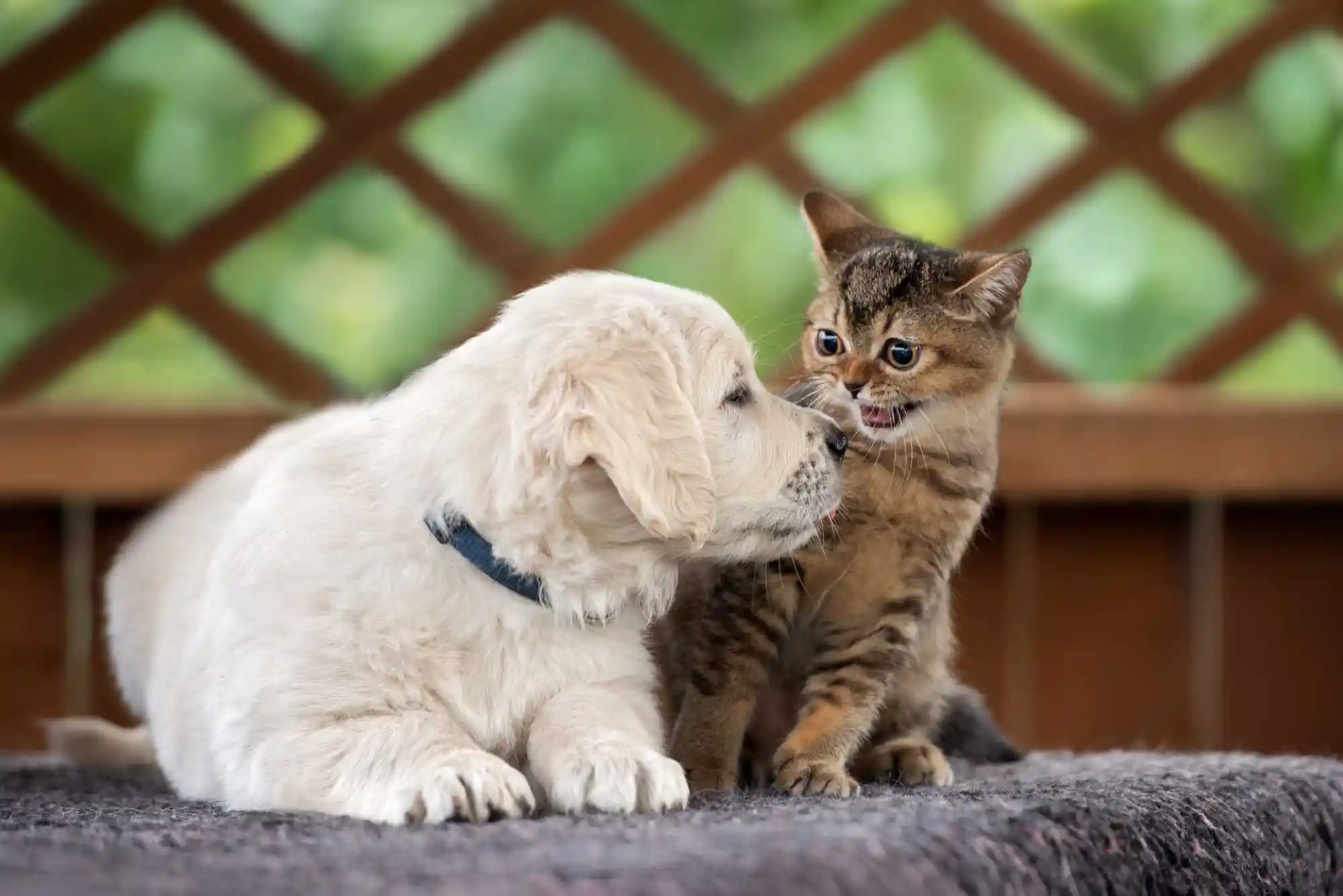
Cats may show discomfort through flattened ears, a tucked body, a rapidly moving tail, growling, or persistent hiding. Hissing can communicate a need for distance rather than an intention to attack.
If stress appears, end the session calmly. Never punish growling, hissing, or avoidance, because these signals communicate discomfort.
Moving From Barrier Introductions to Supervised Meetings
Progress to direct meetings only when both pets repeatedly demonstrate calm behavior during visual sessions. The timeline varies considerably, so do not rely on a fixed number of days.
Choose a quiet room with enough space for the cat to retreat. Remove highly valued toys and food that could create competition.
Keep your dog leashed and reward calm responses. Allow the cat to choose whether to approach, observe from a distance, or leave the room.
Never encourage chasing, even if the cat appears to be playing. A dog that repeatedly pursues the cat may reinforce fear and trigger defensive behavior.
Initially, keep meetings short and finish before either animal becomes uncomfortable. Gradually increase their duration when both pets remain relaxed and responsive.
Continue separating them whenever nobody can supervise. Unsupervised access should come only after a sustained history of safe behavior, and some pets may always require separation.
Common Mistakes to Avoid
One common mistake is allowing pets to meet immediately because they seem friendly through a barrier. Visual calmness does not guarantee that direct contact will remain safe.
Another mistake is punishing a dog for showing interest in the cat. Instead, redirect attention, reward calm behavior, and increase distance when necessary.
Owners should also avoid forcing a cat out of hiding. Hiding can provide an important sense of security during adjustment.
Do not leave the animals alone together too early. Even a brief chase can frighten a cat or injure either pet.
Finally, avoid comparing your pets with other households’ experiences. Age, temperament, previous experiences, and individual behavior all influence the introduction process.
Frequently Asked Questions
How long does it take for a cat to get used to a dog?
Some cats become comfortable within days, while others need several weeks or months. The process depends on temperament, previous experiences, and the dog’s behavior. Progress should be measured through relaxed body language rather than a strict schedule.
How do you introduce a cat to a dog for the first time?
Start by keeping them in separate spaces. Exchange bedding and familiar items before introducing controlled visual contact through a secure barrier. Allow direct meetings only when both animals remain comfortable during earlier stages.
Should I let my dog sniff my new cat?
Your dog can investigate the cat’s scent through bedding and other familiar items initially. During later introductions, allow voluntary investigation at a safe distance. Never force the cat to approach the dog or permit chasing.
What if my dog keeps chasing my cat?
Separate the animals immediately and return to controlled, barrier-based introductions. Work on recall, attention, and calm behavior around the cat. If chasing persists or the dog shows intense fixation, consult a qualified reward-based trainer or veterinary behaviorist.
Can cats and dogs eventually live together peacefully?
Yes, many cats and dogs learn to share a home comfortably. However, compatibility varies, and some animals may never become close companions. Safe management, individual escape spaces, and ongoing supervision help protect both pets.
Conclusion
Learning How to Introduce a New Cat to a Dog: Scent Swapping and Visual Barrier Protocols can make the transition safer and less stressful for everyone. Start with familiar scents, introduce controlled visual contact, and progress toward supervised meetings only when both animals demonstrate comfort.